
The Silent Helpers of Our Fields — The Real Diet of the Baya Weaver
Beyond Beauty: Birds That Balance Nature
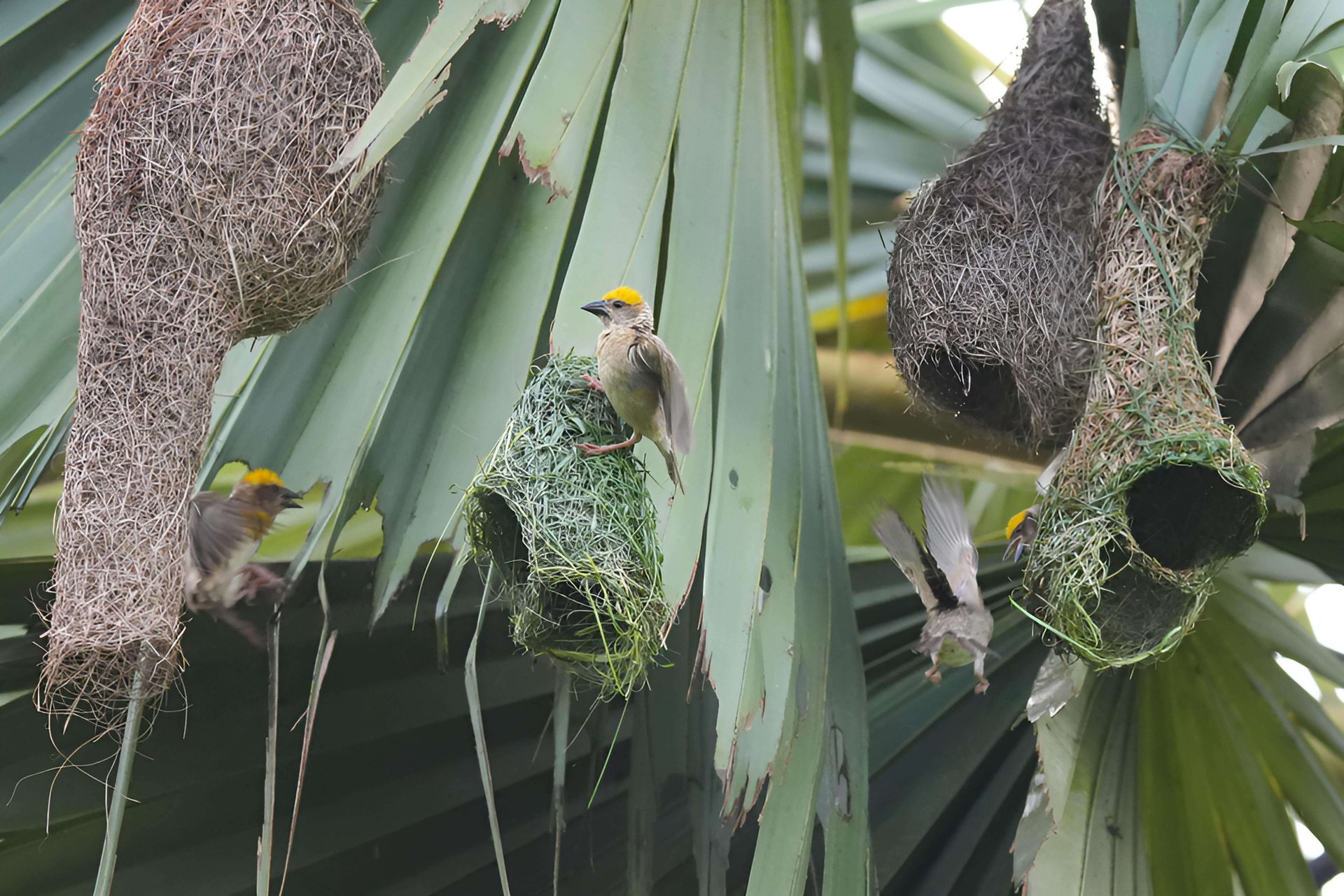
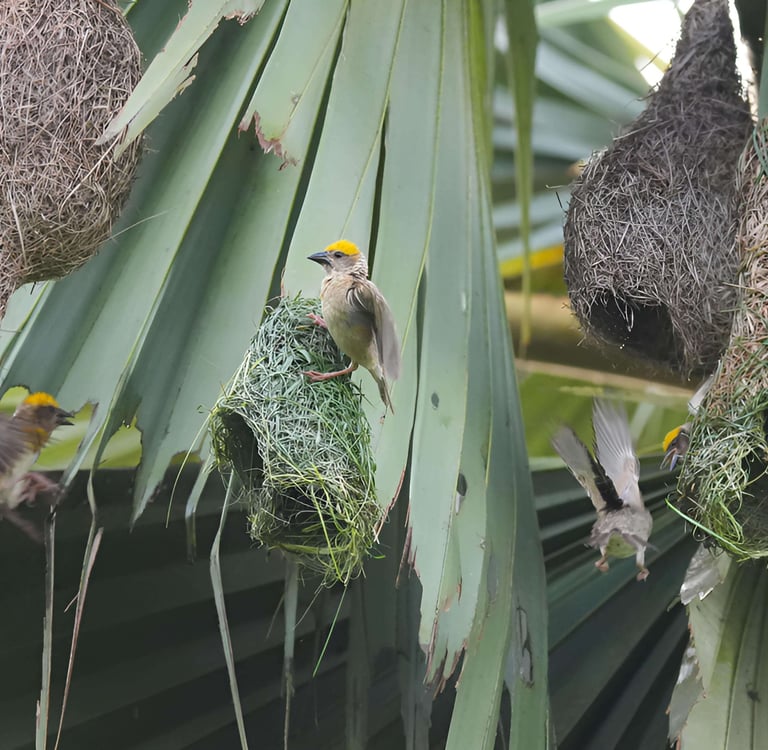
The Baya Weaver is known for its woven masterpieces, but behind every nest lies a deeper story of ecological balance. While we admire their craftsmanship, their most important contribution often goes unnoticed—they are natural pest controllers. Insects make up the bulk of their diet, and their feeding habits play a big role in keeping our fields and ecosystems healthy.
By consuming caterpillars, beetles, grasshoppers, and other agricultural pests, Baya Weavers support biodiversity and agriculture far more than they ever harm it. They aren’t just building nests—they’re protecting the food chain.
The Misconception: Do They Eat Rice?
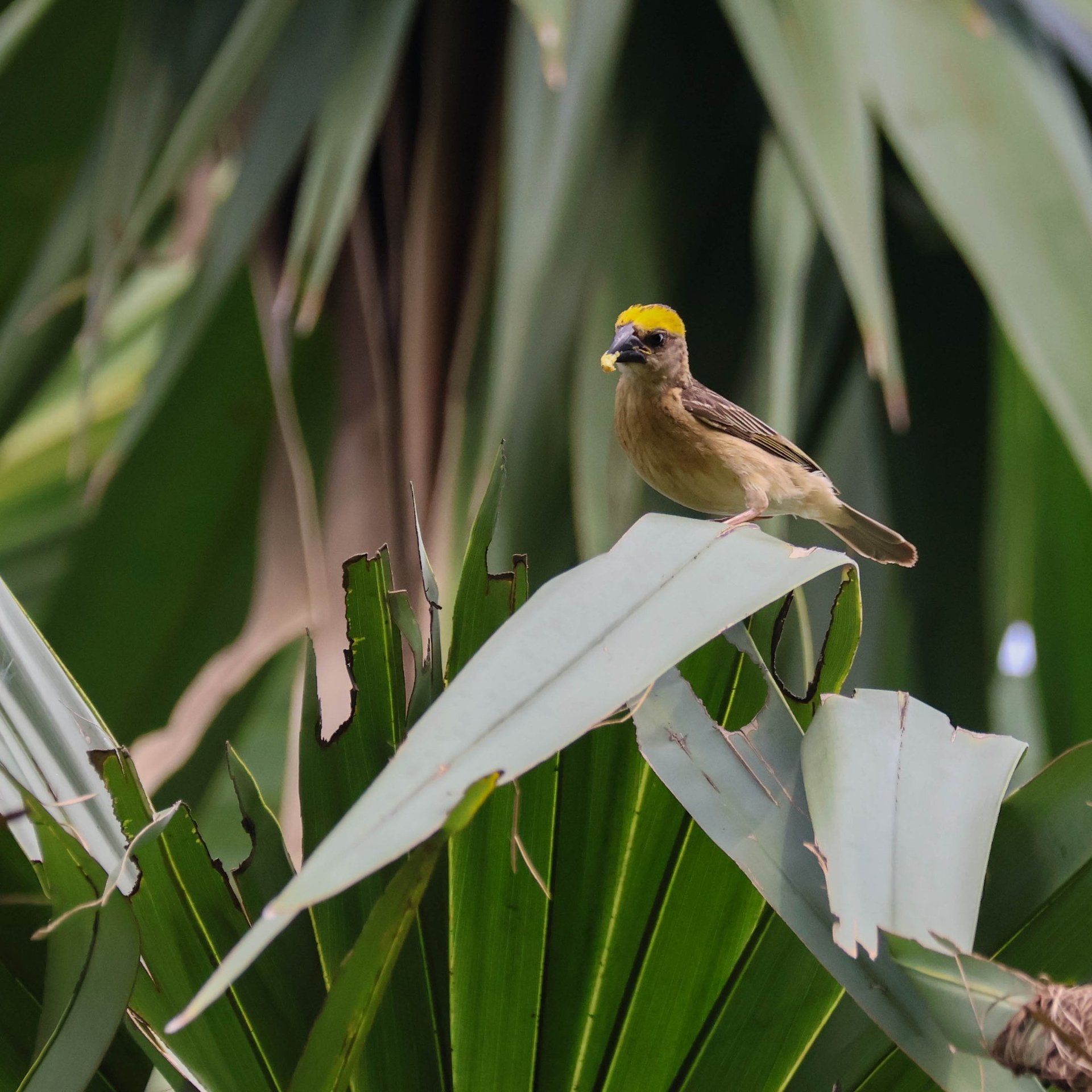
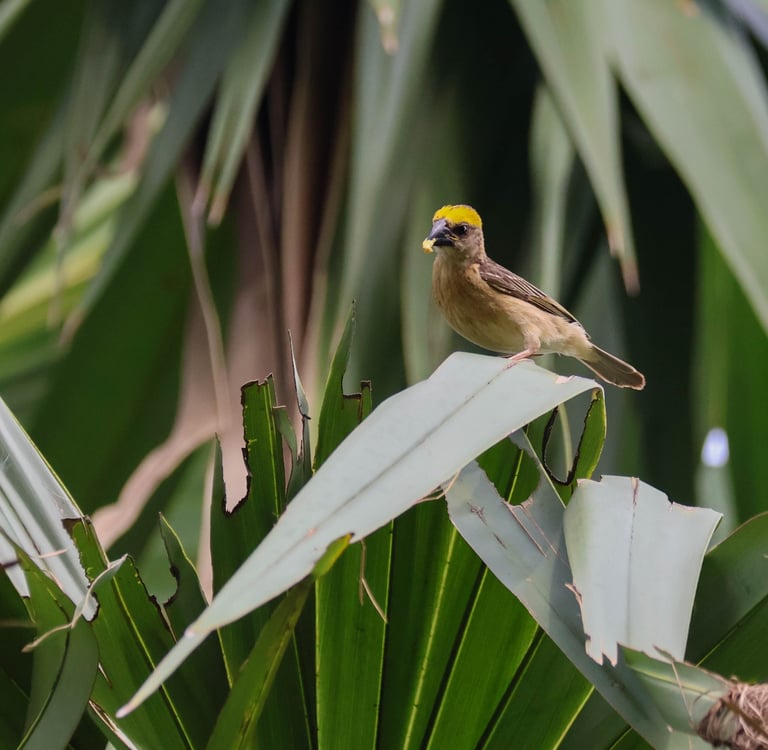
Across many villages, people believe Baya Weavers survive mainly on grains like rice. This misunderstanding comes from seeing them in rice fields or perched on harvested paddy bundles. But the truth is very different.
Baya Weavers depend largely on insects, not grains. During breeding season—when their chicks grow the fastest—rice is typically already harvested. That means the birds aren’t feeding on crops; they’re hunting insects hidden in grasslands, reeds, and field edges. Their presence near rice fields is not a sign of crop damage but a sign of a healthy ecosystem.
Yes, they do eat grains like rice, but only in small amounts. What often goes unnoticed is how much they contribute in return—reducing pest populations, helping farmers, and strengthening the health of the ecosystem.
Why Protecting Them Protects Us
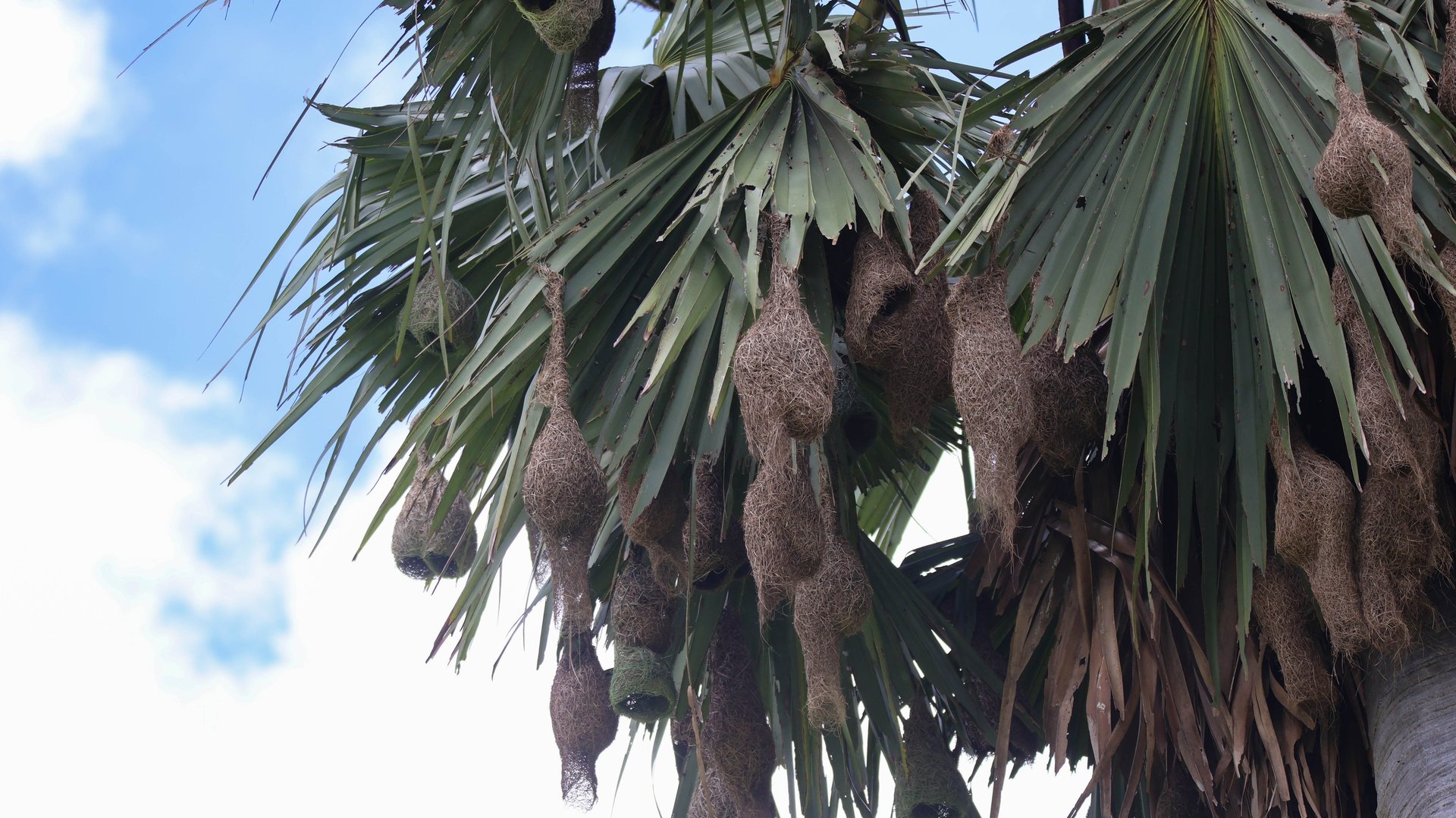
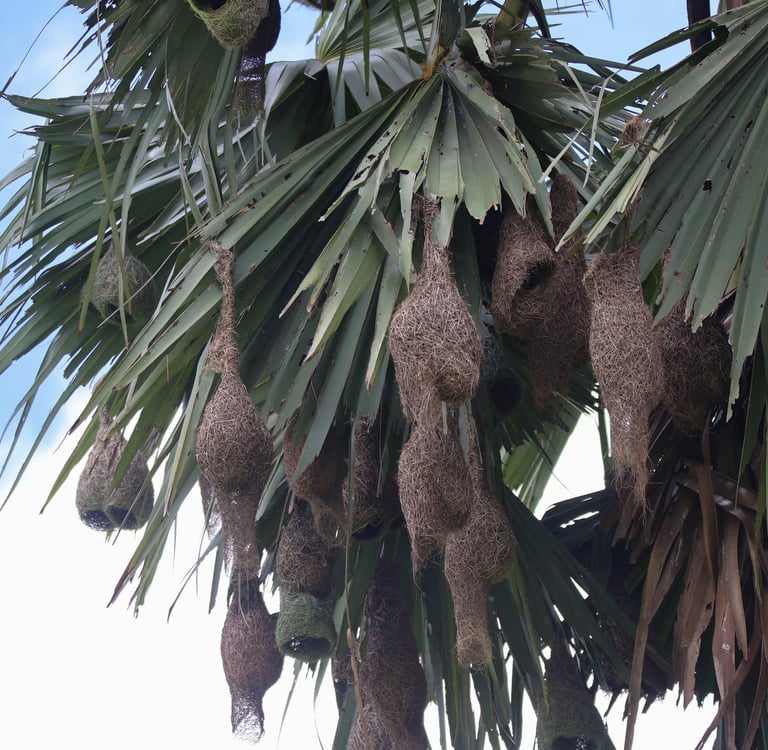
As insect predators, Baya Weavers reduce pests that harm crops and native plants. A single colony can remove thousands of insects in a season. Their survival is directly connected to our own: they help farmers, they support biodiversity, and they warn us when habitats are in danger.
Yet they face real threats—habitat loss, pesticide use, polluted wetlands, and shrinking grasslands. Protecting them means restoring the balance they maintain silently. When we safeguard their colonies, we safeguard our food systems, our ecology, and our future.