
The Silent Struggle of Baya Weavers: What 3.5 Years of Field Observation Reveals About Their Survival
Asith debnath Green
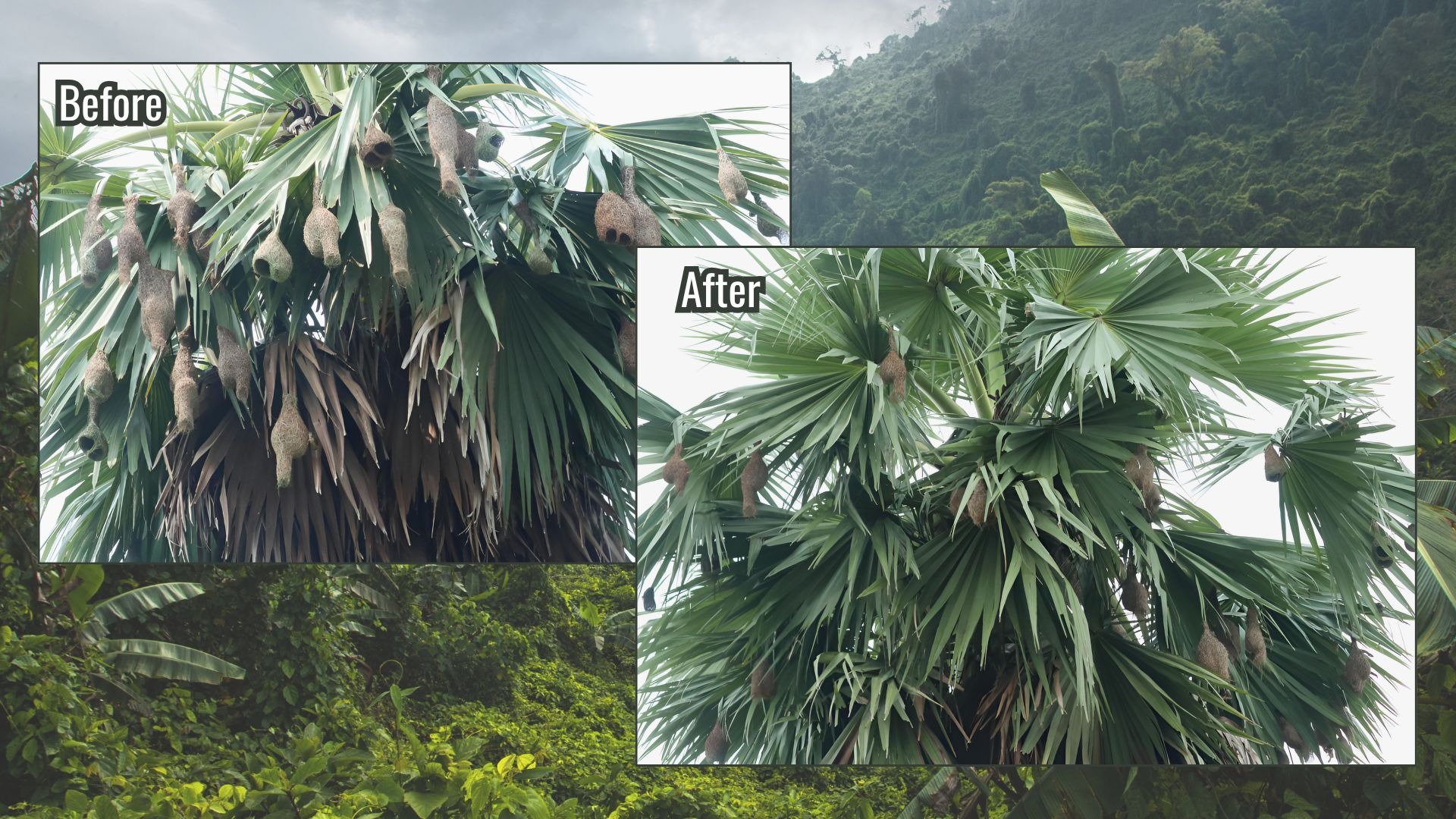
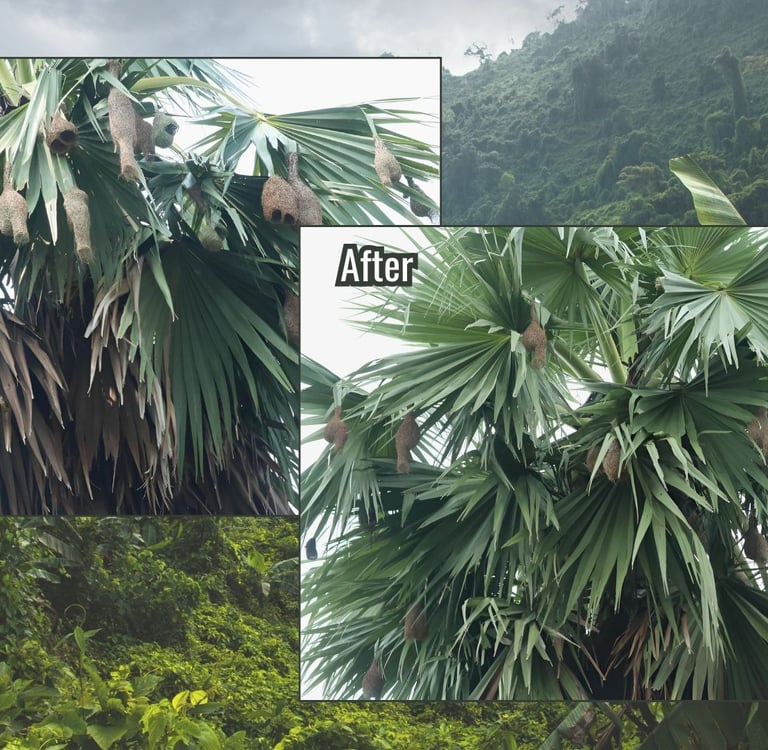
Vanishing Colonies: What Repeated Disturbance Does to a Weaver’s Home
For the past 3.5 years, I have documented over 30 Baya Weaver colonies across fields, wetlands, palm groves, and rural edges. What I discovered is both inspiring and alarming.
Out of these 30 colonies:
5 were completely destroyed due to humans cutting down the nesting branches or removing entire trees.
4 more were partially damaged—mostly from leaf cutting, recreational disturbance by children, and human activity.
These disturbances caused a 50% to 90% reduction in some active nest colonies.
When their breeding structure is repeatedly disturbed, males simply abandon the site. A colony that once held 40–50 nests shrinks to 5–10, and sometimes disappears entirely.
What does this tell us?
Baya Weavers choose trees that humans don’t usually touch—tall palm trees without fruits, thorny clusters, or areas surrounded by bushes. These are the only places where they feel safe enough to repeat nesting year after year. When these “safe islands” disappear, so do the colonies.
Modern development has reduced the availability of undisturbed trees, forcing Baya Weavers into fewer, more vulnerable locations.
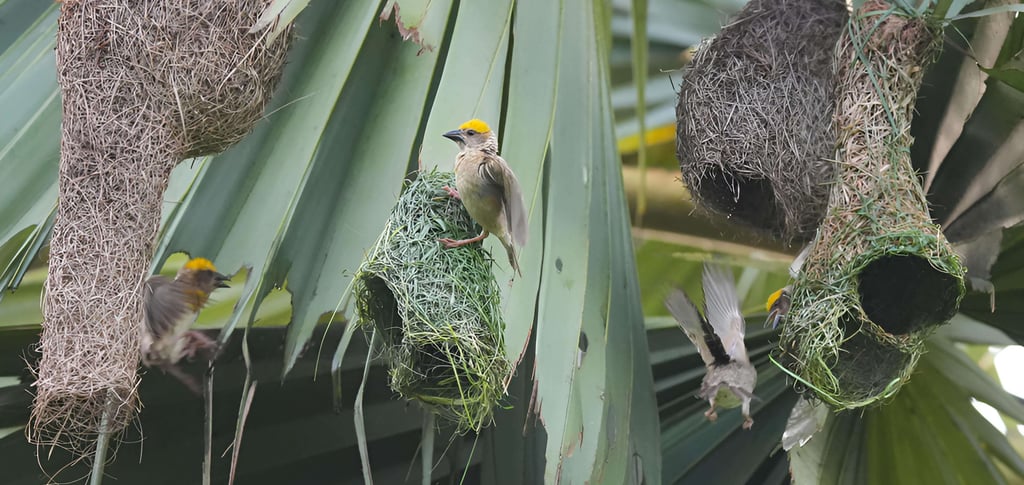
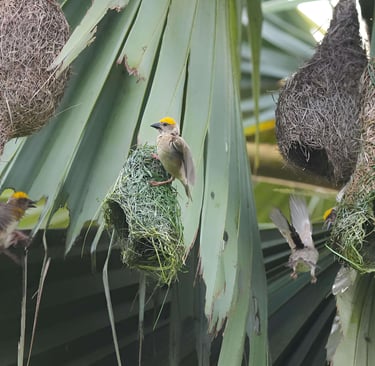
Noise & Human Presence: How Modern Life Disrupts a Natural Architect
My long-term observations show that nesting success drops sharply when colonies are near
✅ busy roads
✅ construction zones
✅ areas with frequent human movement
✅ places where children play regularly
Road noise has a measurable impact. Baya Weavers rely heavily on vocal communication during nest-building and courtship. When the sound environment is polluted with constant honking or loud engines:
Males become more hesitant to display.
Females visit fewer nests.
Chicks get less feeding during peak noise hours.
Adults spend more time alert and less time weaving or feeding.
This is consistent with global research showing that anthropogenic noise disrupts bird breeding success—from sparrows to warblers to weavers. Birds alter their calls, reduce breeding attempts, or abandon noisy sites altogether.
In my colonies, the healthiest ones were always:
✅ at least 200–300 meters away from major roads
✅ partially hidden inside vegetation
✅ located where people rarely go
Where humans go, the weavers slowly disappear.
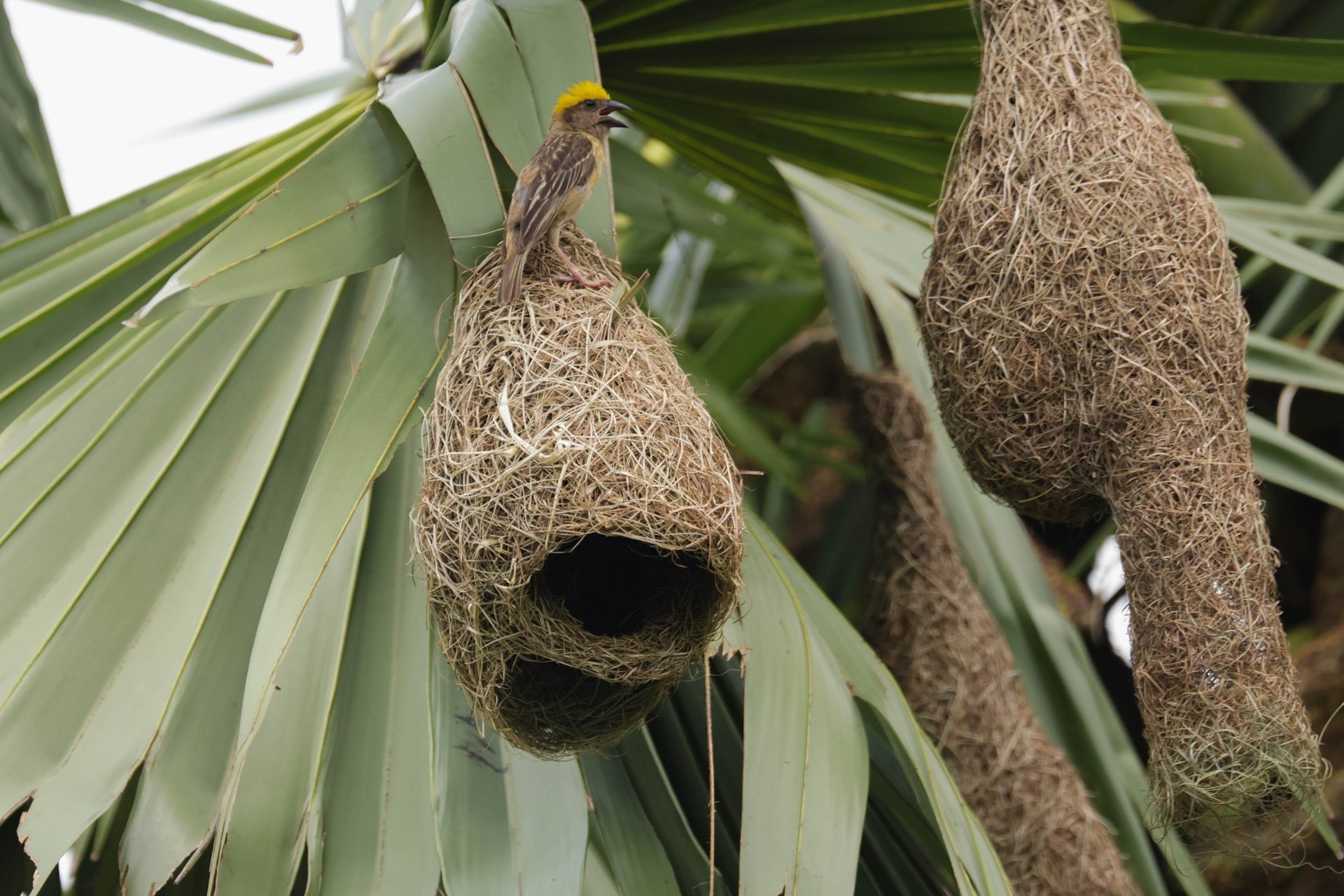
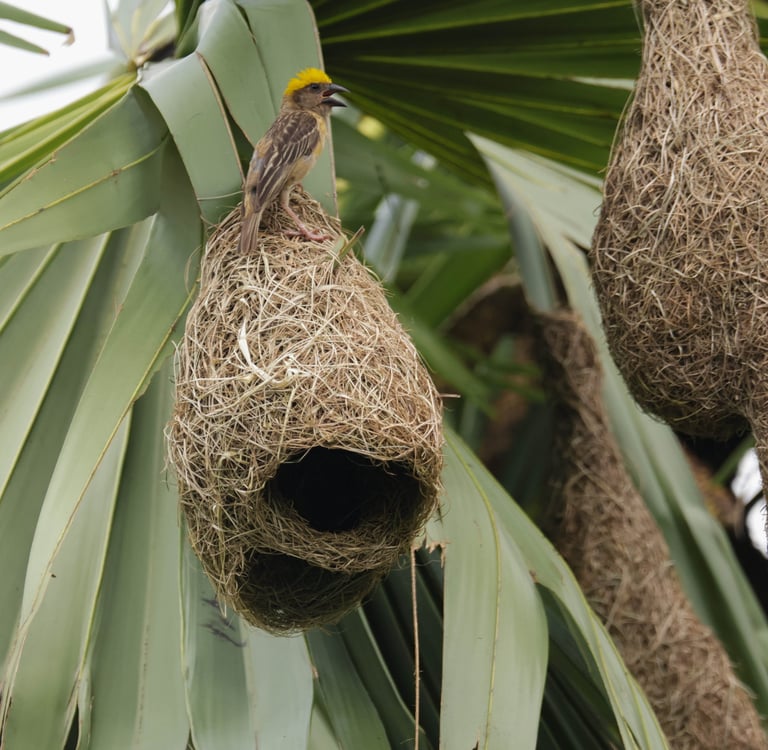
My long-term observation
Despite being protected in many regions, Baya Weavers are still heavily hunted—a fact that many people are unaware of.
During my documentation, I’ve learned from locals and field workers how hunters target Baya Weavers:
1. Thin Illegal Nets Near Trees
Hunters place nearly invisible nylon nets on known trees or flight paths. Birds become stuck painfully by their legs and wings as they land.
2. Bait Traps in Fields
Because weavers live socially, in groups of dozens, hunters spread grain on the ground and lay wide nets.
Once a few land, the entire flock joins—and within seconds, dozens are trapped.
3. Throwing Nets With Weighted Edges
Round nets with small iron or shisha weights are thrown over the birds when they are busy building nests, especially in open fields. The birds, trapped under the heavy edges, cannot fly.
4. Slingshots Used by Children
In quieter fields where no one intervenes, children often target Baya Weavers with handmade rubber slings. Because males repeatedly return to the same spot to weave, they become predictable—and vulnerable.
Hunting is most common:
in open fields
before monsoon rains
around colonies built at accessible heights
in rural areas where people see them as “small meat birds”
This pressure severely affects local populations. A single successful hunting event can remove 20–40 birds—an entire local community.
✅ Conclusion — The Future of Baya Weavers Depends on Respecting Their Spaces
What my 3.5 years of data shows is simple but powerful:
When Baya Weavers are left undisturbed, they thrive.
When humans intervene—even unintentionally—they collapse.
Their colonies are delicate cities woven by beaks, but their survival depends on us:
✅ protecting nesting trees
✅ keeping people away during breeding months
✅ stopping illegal hunting
✅ maintaining quiet, safe habitats
✅ raising awareness
Every nest they weave is a story of resilience.
Every colony lost is a story of silence.